
How to win more deals with better proposals
These lessons come from Kyle Racki, CEO of Proposify, based on insights from over 900,000 proposals analysed on the Proposify platform and shared in a recent YouTube presentation.
Your proposal is not paperwork.
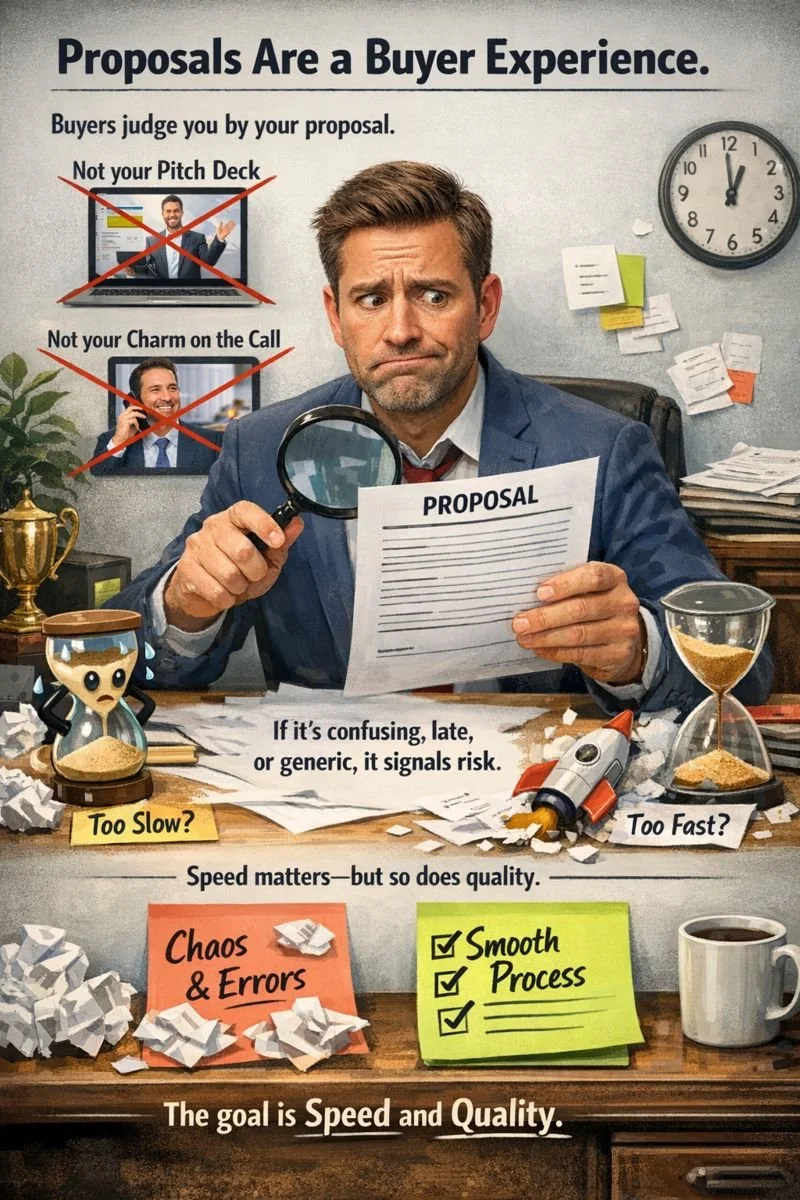
Buyers judge you by your proposal.
Not your pitch deck.
Not your charm on the call.
If it’s confusing, late, or generic, it signals risk.
Speed matters—but so does quality.
Too slow, you lose momentum.
Too fast, you make mistakes.
The goal is speed and quality.
That only comes from process.
.
Build a Proposal Process (Not a Dark Art)
Whatever it is, the way you tell your story online can make all the difference.
Proposals feel like a dark art because they’re not public.
You rarely see how great companies do them.
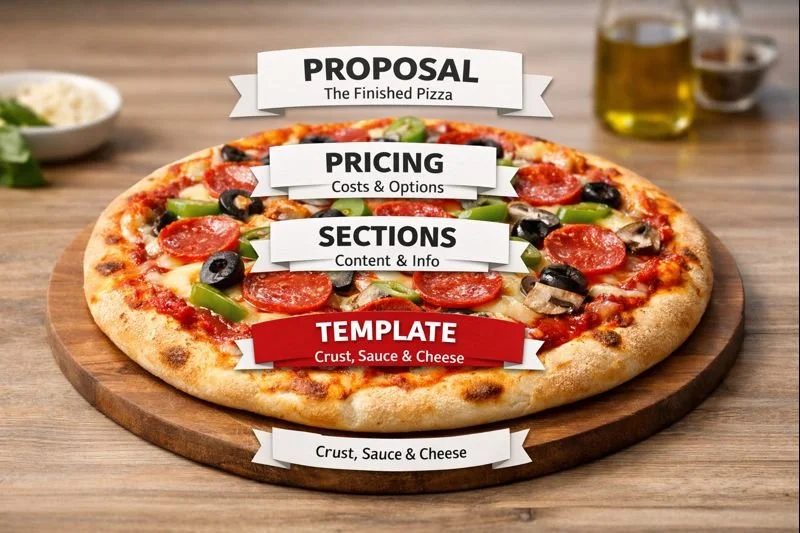
Kyle uses a simple pizza analogy:
Template = crust, sauce, cheese
Sections + pricing = ingredients
Proposal = finished pizza
The base stays the same.
Only the ingredients change.
When every proposal starts from scratch, quality drops and speed dies.
The Anatomy of a Winning Proposal

Winning proposals are surprisingly consistent. They are simple, familiar and buyer-friendly.
The core structure:
Cover
Introduction
Your Process
About You
Social Proof
Pricing
Next Steps
Use Video to Reach Invisible Decision-Makers

You won’t meet every decision-maker.
V
ideo bridges that gap.
Use short videos to:
Humanise the proposal
Reinforce your brand
Explain your thinking
Build trust when you’re not in the room
An intro video alone can lift engagement—fast.
Social Proof Works (But Timing Matters)
Social proof isn’t about bragging.
It’s about evidence.
But don’t lead with it.
Let buyers first understand:
Their problem
Your approach
Your thinking
Then show proof.
Pricing: Frame It as an Investment
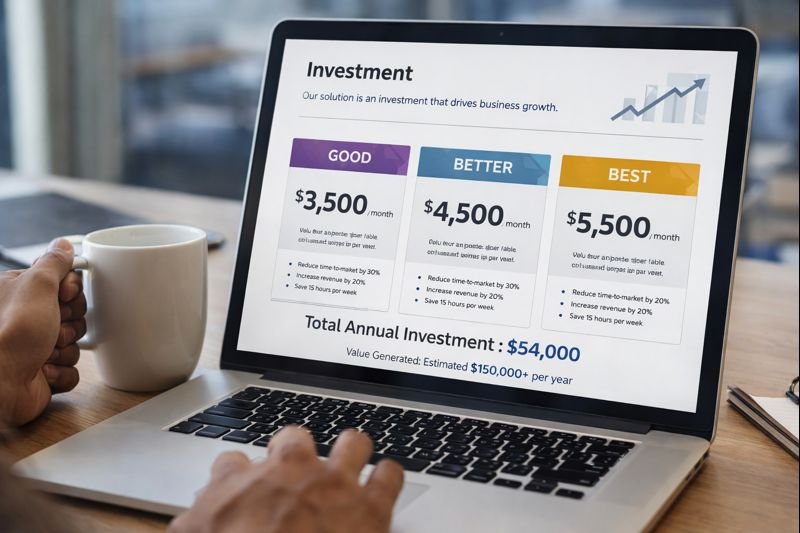
Pricing is the first thing buyers look for.
That’s why it shouldn’t be at the start.
Put pricing in the middle.
Make them earn it!
Key rules:
Price by value, not effort
Reduce choice to reduce fatigue
Use Good / Better / Best options
Add optional add-ons so buyers upsell themselves
This is straight out of 20 years of SaaS playbooks—and it works.
Automate Follow-Up (Without Being Pushy)

Manual follow-up is inconsistent.
Automated follow-up is invisible—and effective.
Automated reminders increase close rates by ~5%:
View reminders
Sign reminders
Expiry reminders
You stay present without chasing.
Engagement Tells You the Truth
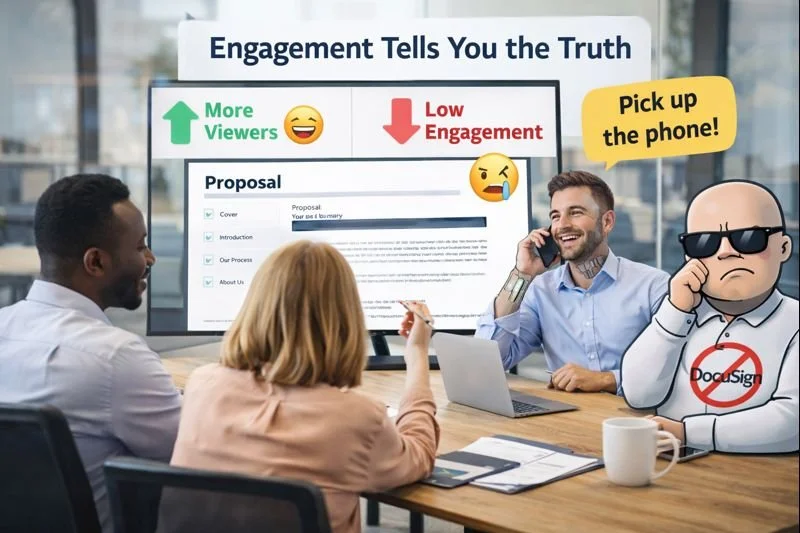
One insight matters more than most founders realise:
When a proposal is shared internally, close rates double.
More viewers = real consideration.
Low engagement is a warning sign.
That’s when you pick up the phone.
Proposals should sell—not just collect signatures.
The 7 Traits of Winning Proposals
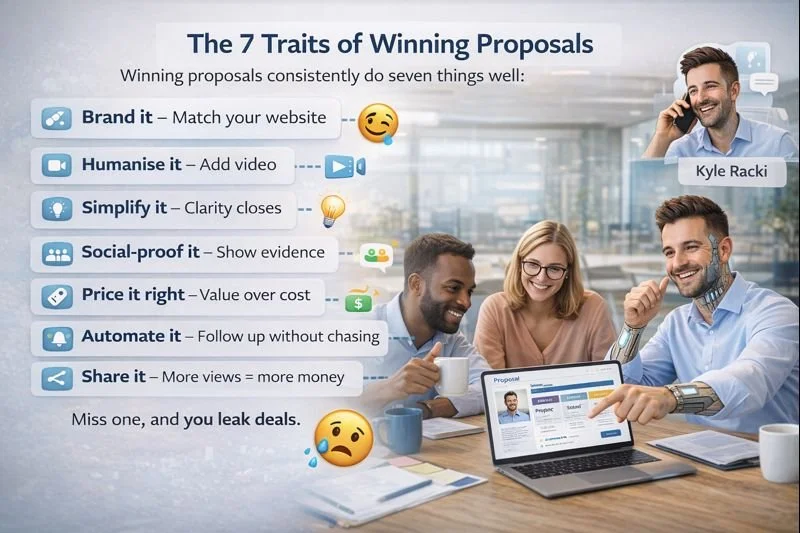
Winning proposals consistently do seven things well:
Brand it – Match your website
Humanise it – Add video
Simplify it – Clarity closes
Social-proof it – Show evidence
Price it right – Value over cost
Automate it – Follow up without chasing
Share it – More views = more money
Whatever it is, the way you tell your story online can make all the difference.
Bonus: The New Deal Advantage — HI + AI
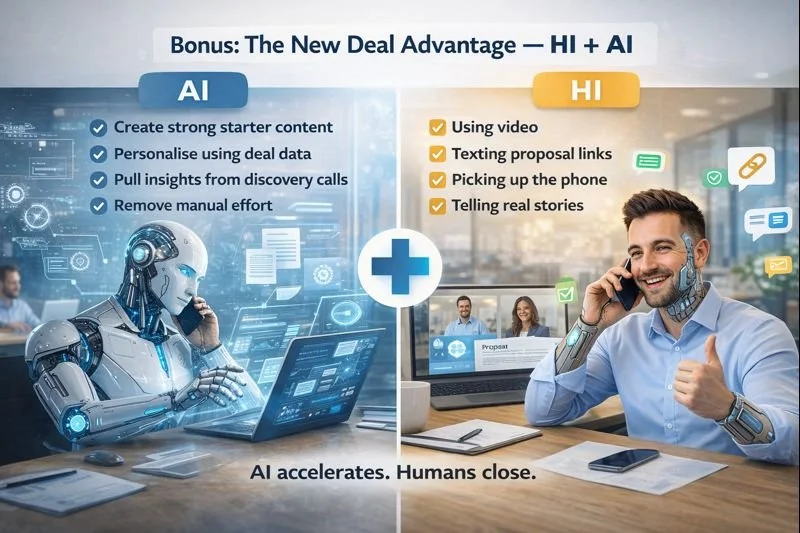
The future of proposals isn’t AI alone.
It’s HI + AI.
AI helps you:
Create strong starter content
Personalise using deal data
Pull insights from discovery calls
Remove manual effort
Humans still win by:
Using video
Texting proposal links
Picking up the phone
Telling real stories
AI can accelerate the process. But to close is human.
Final Thought
If your proposals feel slow, heavy, or fragile—it’s not your team.
It’s your process.
Fix the process, and deals move faster.
