

BLOG
Five emerging Trends that will shape the future of Sales
A few months back Tiffani Bova wrote this article on the Salesforce blog regarding the emerging trends in Sales. It is a good article that makes you think
Here is a quick overview with my comments added (PD):
Emerging Trend One: 50% of Sales Metrics will change in the next three years.
TB: Sales leaders will be seeking to get deeper into the customer journey in regards to measuring the success of sales teams. Budgets and win rates are not going away but metrics along the lines of customer satisfaction will be included.
PD: I don’t believe the change will be that significant because from what I have seen Sales will always be measured by what it has control. Sales teams do not usually control customer success. They are tasked with getting the customer to confirm as soon as they are possibly able to! Customer Success is important but my mixing it into sales too much you risk missing that next quarter earnings for the firm. And as everyone who works in sales knows, sales is about tangible results!
Emerging Trend Two: Reps will be compensated on usage not deal size.
TB: This change means that closing a deal is less important than getting a greater amount of users to successfully use it. Reps will be compensated more if a greater number of users take up the product.
PD: I think this is a fascinating insight! This will mean that during the sales process the Rep won’t just be focussed on getting ink on the contract, but work hard to get more stakeholders buying into the application. It will lead to better adoption by the organisation and more success down the track.
Emerging Trend Three: Customer service agents are the new Sales Reps.
TB: She is talking about how Customer Service and Customer Success staff will become just as empowered as Sales Reps currently are within the organisation.
PD: I can see the benefits of some larger SaaS organisations doing this. However the risk is that if Customer Success becomes more commercial they may dilute the skills that set them apart in the first place. Customers like Customer Success because they have only one focus. Customers feel more safe to open up to a CSR about what their real challenge is.
Emerging Trend Four: Modern selling continues to explanatory into more digital channels.
TB: The lines between B2B and B2C will blur. Customer engagement will increase on emerging channels: SMS, chat, mobile chat and video.
PD: I agree this is happening and is being driven by both the sales professional and the customer.
Emerging Trend Five: AI will require more sales headcount, not less.
TB: Studies show that AI is leading to more job growth, not less.
PD: For the past 3 years AI has been oversold as a panacea to solve all of life’s problems. One day we will all be enslaved by our AI masters! 😵 But at least for now AI is playing a supportive - not a lead role.

Asking for advice
There is a common observation made by startup investors in Silicon Valley:
“If you ask investors for money you will get advice. If you ask them for advice you will get money”.
I have had similar experiences in the sales process. If you are new and genuinely trying to open up new markets, you should approach senior executives for advice.
Everybody likes to be valued for their wisdom and perspective. Asking very specific questions on the viability of your offering will get interesting responses.
When you hear criticism, ask why. Go deep. These insights are super valuable.
It goes without saying that your motivation for advice needs to be genuine.
Often the exchange will provide leads or even wam introductions if the executive sees value in your mission as a startup founder.
It will cost you a few dollars for a coffee and 20 mins of your time. What have you got to lose?

How to present your sales pitch in five slides
Startups give too much information in their sale pitch.
This might feel therapeutic for the founder, but it can kill the sale because too much information will confuse and distract the buyer.
Instead you want to present a simple message that gets your customers thinking about the value they can get from your product or services.
Here is one approach using five simple slides:
- About your organisation (size, age, customers).
- List the products or services you sell.
- Summarise the value this brings to your customers.
- Provide 3 short stories or case studies that illustrate that value. Limit each story to 30 seconds.
- Explain the process you usually take with onboarding customers. You could explain your basic terms, support offered and other initiatives you think they might be interested in.
The last slide is a good way to get the customer thinking about how the product would work within their organisation. It also allows you to ask the most important question of the entire meeting: What is their decision-making process?
KIS = Keep it Simple!


Inner Voices...
He is not going to respond to my request to meet.
He is too busy for me.
I am just annoying her.
I tried selling to that company in the past and it just did not work!
They would much rather deal with my competitors.
I don’t have a strong relationship with that organisation.
What every you are saying to yourself…
It is true.

How to build a relationship with large organisations? Approach their blog writer!
Getting into new large organisations is a challenge.
They have gatekeepers to keep people like you from meeting with them.
You cannot blame companies for doing this. If their senior executives accepted every invitation to meet with a potential vendor, they would never get their own work done!
This morning while reading the Hubspot Blog, I came across this interesting article.
One suggestion was “View their Author Page” which means see who is writing all the interesting articles on the Company Blog. Find a way to connect with them via common interests (shared problems in the same industry, innovation or other topics), then use that relationship to be introduced to important stakeholders within the organisation.
Chances are, someone who has been trusted to write about the Company’s vision is already an important stakeholder. Their support could help you to build a great relationship with that organisation.
I have not tried this idea myself. But I will give it a try myself.
Stay tuned!
Getting personal with your email prospecting
Please try and the following exercise:
Check your inbox and deleted folders for emails you received that you decided to ignore.
Why did you do this? Could it be:
- The content was not a topic you were interested in
- The writing style or format was clearly generated by a machine; or
- You felt no personal connection to the writer or message?
Regardless of how you email prospect, keep in mind your message is going to a human being who has very powerful conscious and subconscious filters to ignore what’s not important to them.
Case in point: what was the last Banner Advertisement that you last saw?
When you email people you have no relationship with, consider the following:
- Find a style of writing that fits to your “voice” in the way you write. It conveys they are dealing with a human being.
- Express your enthusiasm and warmth because it will create a better connection. I use emojis to assist me with this. 😀
- Be direct about why you are writing and what you are asking. I limit my first email to 3 lines. It can help you to keep on point and remove unnecessary words.
- Check out the Templates section of my website. The Google Sheet has many good examples.
Marketing and prospecting tools have yet been able to comprehensively pass the Turing Test.
Industries will vary but with the right amount of effort you should expect to get at least a 50-80% response rate.

Templates from Predictable Revenue book
https://predictablerevenue.com/templates
I have been reading the book, Predictable Revenue by Aaron Ross and Marylou Tyler.
Love it!
It is highly relevant for startups seeking to improve their sales prospecting process.
It is connected to a website, https://predictablerevenue.com with an additional Templates section.
The templates contain the following resources:
- 3 Goals Today
- Outbound day in a life template
- Advisor email templates
- Predictable Revenue Cheat Sheet
- Videos by Aaron Ross on tripling your growth
For me the Predictable Revenue Cheat Sheet is by far the best. If you like the message then check out the book!


Losing a Customer
Yesterday I took my suit in to get dry cleaned.
The standard dry cleaners where I live charge $30 for three items (one jacket and two trousers).
On this occasion it was more convenient to take the suit to a premium dry cleaner i.e. the type that dry cleans wedding dresses and tuxedos etc.
I like this dry cleaner, and have been okay with paying a 20% premium.
On this occasion I was charged 60% higher than the “standard” price!
I only realised this after I had dropped off my items.
I started to head back to the shop to change my order. But I stopped and realised I did not want to embarrass myself through complaining on price to an organisation known for quality. It would fall on deaf ears.
So I sucked it up and decided never to use that dry cleaner again.
The main reason is that I did not feel that they were approachable to discuss my concerns and come up with a better solution.
As a startup founder it is not natural to want to hear bad feedback on your product. It will make you feel depressed - especially if you can’t fix it.
But your customers need to be heard. The mere access to you to complain about something can do wonders. You will be better tuned into their buying behaviour.
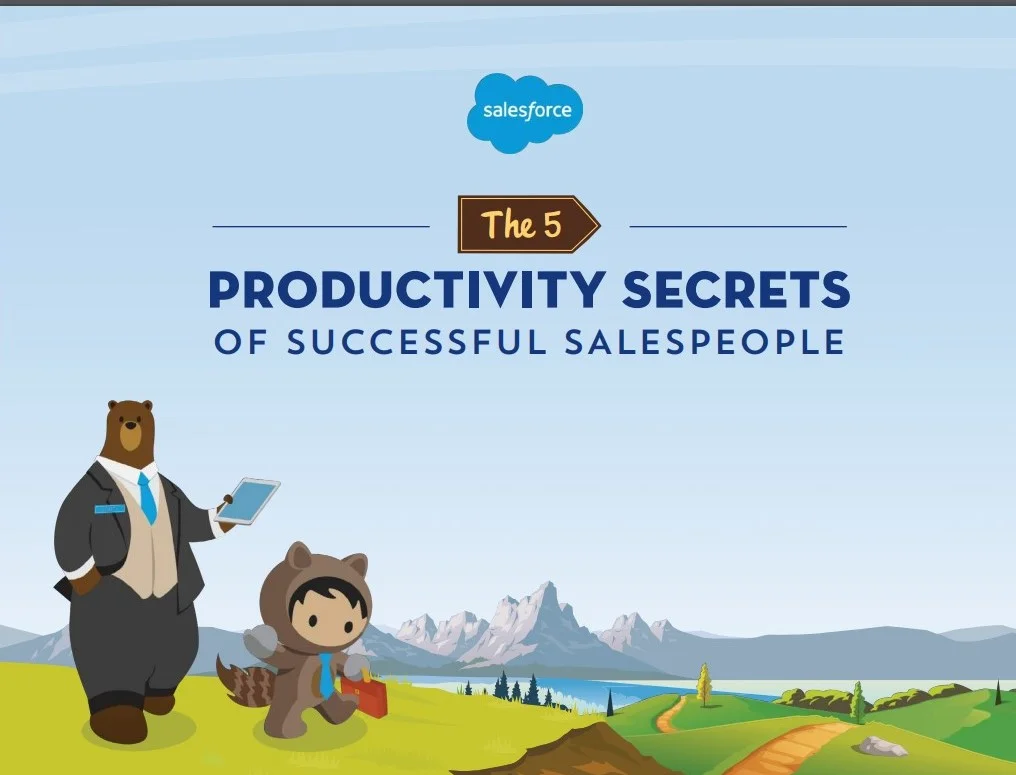
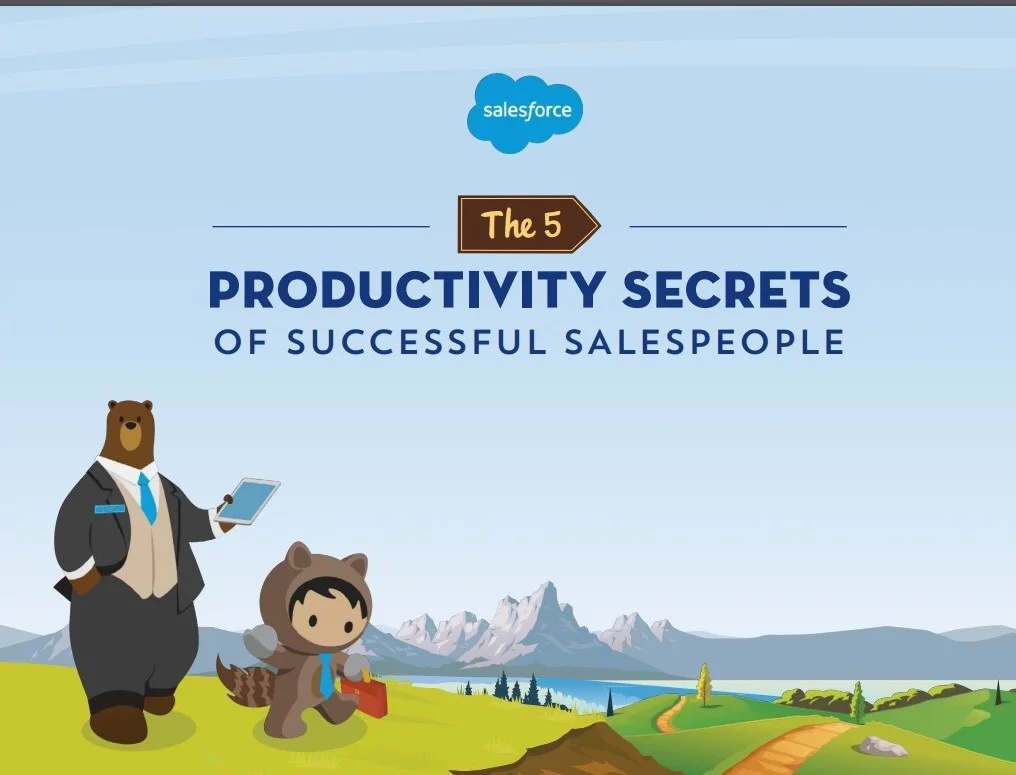
Productivity Secrets of Successful Salespeople (Salesforce)
I am a big fan of research that can help us all get better at selling.
Salesforce.com has produced this e-book that maps out simple ways for us to be more productive.
I recommend that you download this e-book and subscribe to their other material. It can only help!
For those who only have 30 seconds to understand the key points… here they are:
Start your day off smart: Win the morning by developing a routine that puts your agenda #1 - not others. This will help you take control of your time and effectiveness.
Stay productive on the go: Because sales people are not usually desk bound, you are out travelling and between meetings, makes sure you are setup to run your sales process via mobile phone and other handy tools/apps.
Conquer small but mighty time wasters: 41% of salespeople report that they spend too much time on administrative tasks in an average week. Find ways to cut back and reduce this time so you can focus on your main job of selling.
Use data insights to prioritise next steps: Now this is probably a plug for the big CRM companies like Salesforce, so that you use their tools! But to be fair using data insights should increase your productivity, depending on the industry that you work in.
Automate as much as possible: “Saying that you are too busy to automate is like furiously digging holes with your bare hands and saying you’re too busy to look up and grab a shovel.” Iman Maghroori (Salesforce). If you can find ways to automate your sales contact points, you can claw back some of your lost time.
If you think these points are worth thinking further then you should check out the e-book!
My latest favourite book - High Growth Handbook
This week I have commenced reading High Growth Handbook by Elad Gill. So far so good.
The book is a guide startups that are about 100 employees to scale into the thousands of employees.
The author is certainly one of the few in Silicon Valley with this experience.
According to Chrunchbase, Gill is a serial entrepreneur, operating executive, and investor or advisor to private companies including AirBnB, Pinterest, Square, and Stripe. Previously, Elad was the VP of corporate strategy at Twitter, as well as ran various product teams (Geo, Search). He also spent many years at Google, where he started the mobile team and was involved in all aspects of getting the team up and running. He was involved with 3 acquisitions (including the Android team) and was the original product manager for Google Mobile Maps and other key mobile products.
Prior to Google, Elad had product management and market seeding roles at a number of Silicon Valley companies.
So far I’m enjoying the experienced practical insights and witty perspectives that keeps you turning the pages!
